An Ongoing Investigation: Anthony Tafuri on Phases, Artistic Growth, and the Work That's Still Coming
Anthony Tafuri has spent decades working in cast bronze and aluminum, from landscape-inspired sculpture to community installations pressed into the sidewalks of Portland, Maine. Right now he is mid-transition, bringing the logic of moldmaking and casting into functional work. He can feel where it is going before he can explain it. He thinks that is probably the point.
If you walk through Longfellow Square in Portland, Maine, you might stop and look down. Pressed into the sidewalk, where bricks once were, are 125 small bronze tiles. Sea creatures. Plants. Animals. Each one made from a clay bas relief by someone who lives or works in the city, then molded, waxed, and cast in bronze by a team of sculptors working with the Portland Public Arts Committee.
Anthony Tafuri was one of those sculptors. "I love the fact that people walk over and encounter these on a daily basis," he says, "and how the reliefs might add a subtle shift of focus for the public going about their daily routine."
That phrase, a subtle shift of focus, turns out to be a pretty good description of how Tafuri thinks about making in general.

From the landscape outward
Tafuri spent years making sculpture rooted in the physical world. Cast bronze and aluminum, forms drawn from erosion, growth, the slow pressure of forces on a landscape. He was drawn to Antony Gormley and Magdalena Abakanowicz, sculptors whose figurative work carries what he calls an "understated and powerful presence."
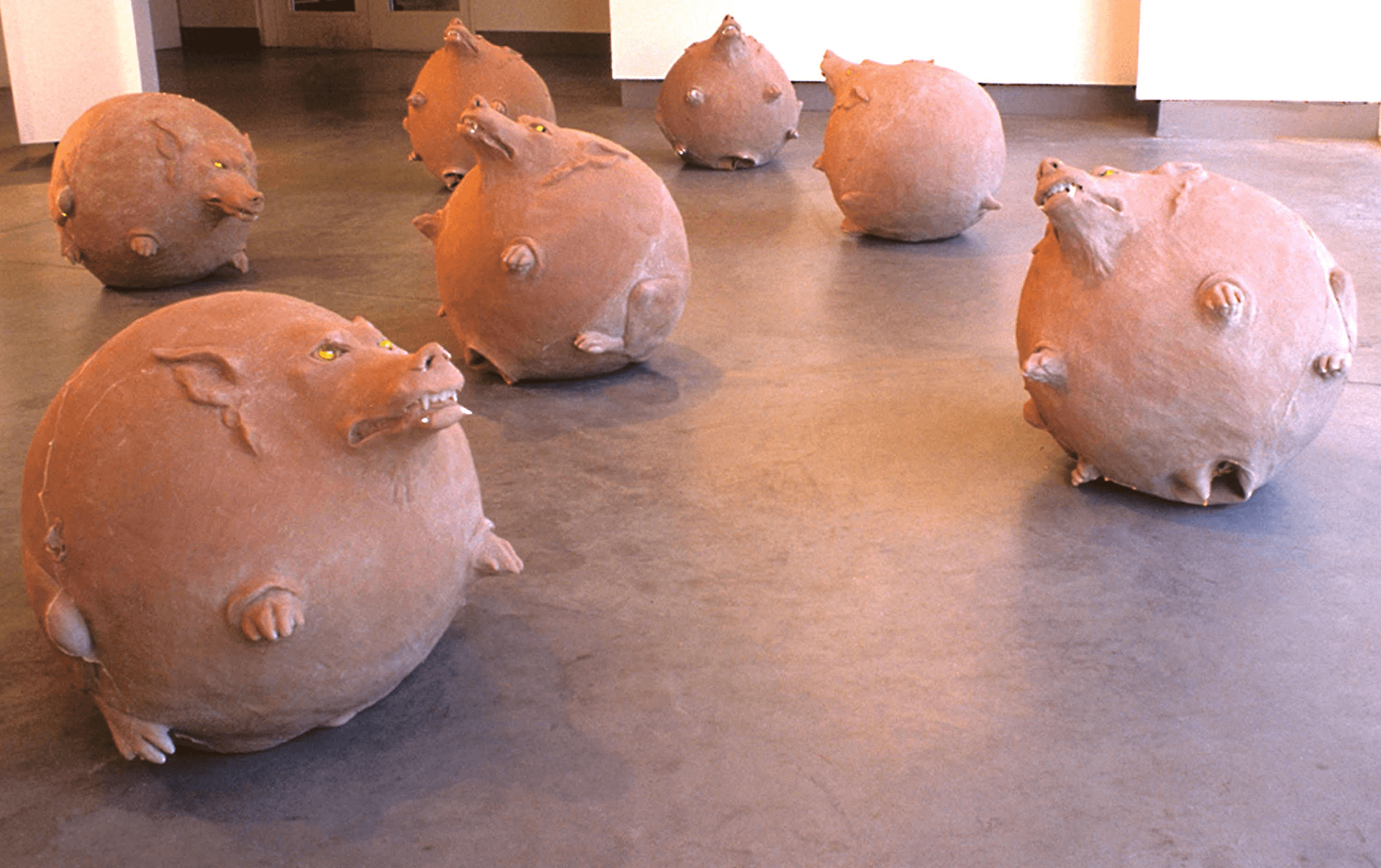
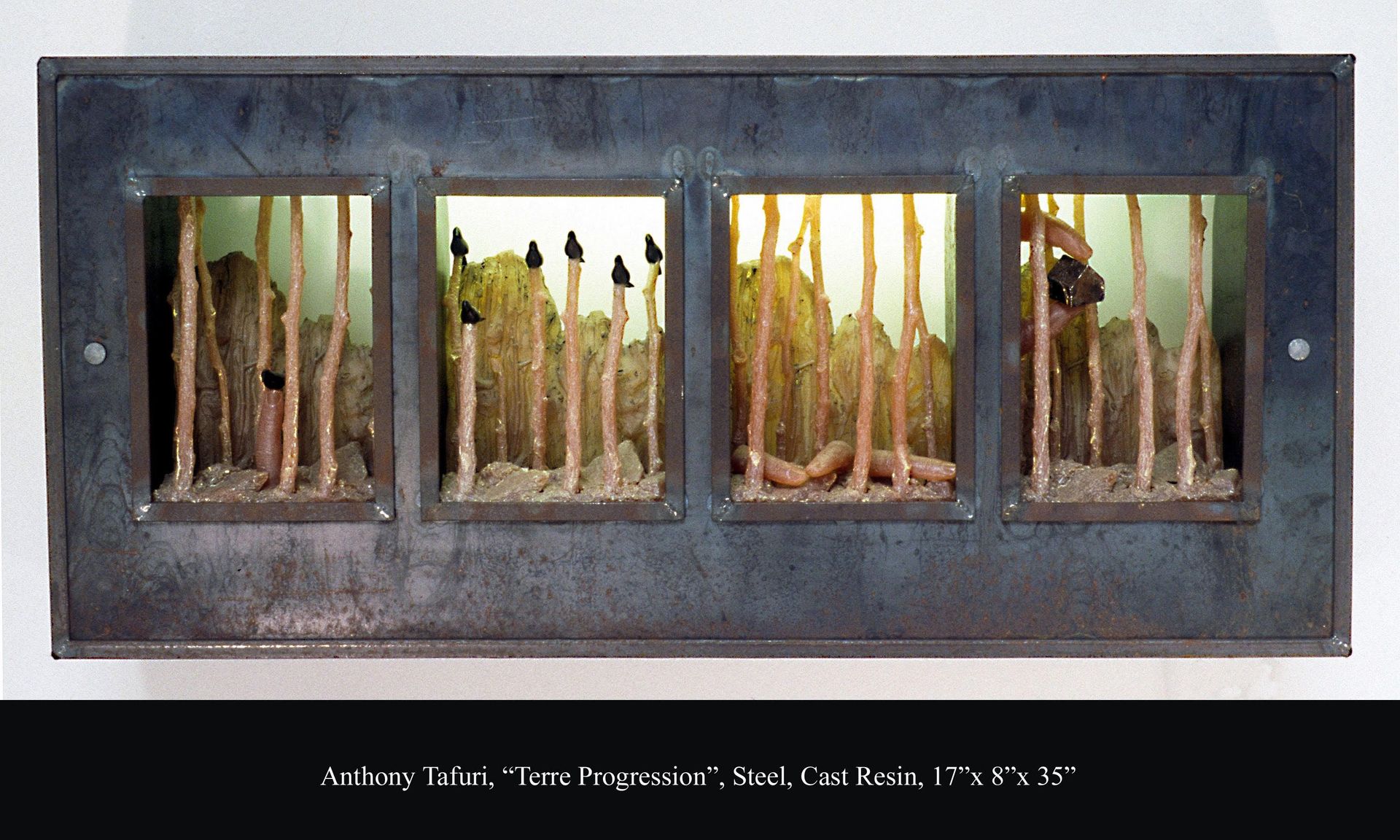
Over time his attention shifted inward. He started working from his children's drawings and from folklore, exploring the space where rational thought and fantasy overlap. Pack of Wolves and Terre Progression came out of that period. "I wanted there to be a light, humorous side to this work while also introducing a little sense of unease," he says. "If you think about children's stories, there is often a bit of the dark side, and I liked playing with the duality of that."
Magdalena Abakanowicz' work here.
The useful constraint
These days, functional work is more in the foreground. Tafuri is clear that this is a shift in emphasis rather than a break. "I have always created functional work but it is more in the forefront now," he says. "I like having the parameters of utilitarian objects, like the ergonomics, as a framework for exploring what I can do with the media."
This is something makers who work across categories know well: constraints can be generative. The requirement that something fit a hand, hold a liquid, or hang on a wall is not a creative limitation so much as a set of starting conditions. Tafuri treats them that way.
What frustration is actually telling you
Where it gets interesting is in what Tafuri is working toward now. He knows he wants to bring moldmaking and casting back into his functional pieces. He just hasn't worked out how yet.
"It's like my subconscious is pointing the way, but my reasoning and logic haven't caught up yet," he says. "I think this kind of thing is often a precursor to change and growth as an artist."
He wasn't always able to read that signal. "Earlier in my career when I felt that I needed to expand or move on I would get frustrated, kind of like a writer's block. I have come to recognize, though, that these are the moments when your gut instinct is telling you that you're ready for new challenges and avenues of discovery. Without those moments you would never grow as an artist."
That reframe, from growth to readiness, is the kind of thing that takes years to learn and is worth passing on.
What non-artists teach you
Tafuri has been on the faculty at the Maine College of Art for fourteen years and has taught adult education throughout his career. Working with people who don't identify as artists, including the community members who made the Underfoot tiles, has sharpened his thinking about what making actually is.
"I really cringe when I hear someone say 'I'm not talented,'" he says. "Think about it, you would never see someone pick up a violin, give it a bow, and say 'I'm not talented.' Everyone could be successful if your interest lies there." Art, he argues, is intellectual, technical, and introspective practice. Talent is the wrong frame entirely.
His students' questions keep him honest about his own priorities, forcing him to constantly reaffirm or reevaluate what matters most in the work.
The investigation continues
Ask Tafuri where he's headed and he won't give you a destination. "I am constantly growing in ways that are hard to anticipate, but that is part of the fun and the challenge of making. It's an ongoing investigation."
For anyone thinking about commissioning a piece, he wants them to know that serious makers thrive on that kind of collaboration. The work has a lineage, a set of questions behind it. The conversation that goes into a commission is part of that.
You can find Anthony Tafuri's work on
Or learn more about him at his


Related Products


Hand Forged Wrought Iron and Japanese Maple Coffee Table

Discover true craftsmanship each week
A guide to the best items from the best makers and the stories behind them.