A Crib Worthy of a Young Wizard: Doug McPherson on Four Weeks, One Discontinued Stain, and the Habit That Saved the Commission
In May, a couple in Pittsburgh posted a request for a Harry Potter themed crib. A woodworker in Saranac, Michigan answered it cold. Four weeks later a crate went out on a freight truck. The interesting part is not that it went well, but what Doug McPherson did in the week it nearly did not.
Every commission is really two projects running at once. There is the object, which is a question of skill, and there is the relationship, which is a question of temperament. Most makers are better at the first than the second. The pieces that arrive well, and the clients who come back, usually belong to the makers who treat both as the job.
In May of this year a couple in Pittsburgh, expecting a daughter that summer, posted a project on Maker Marketplace. They wanted a crib with a Harry Potter theme, convertible, to sit alongside a dresser already standing in the nursery. Their stated budget was $4,000.
Doug McPherson saw it from Saranac, Michigan, and answered cold.
The bid that named its own limits
McPherson has run McPherson Visions in Wood for more than twenty years. His pitch opened the way most do, with experience and enthusiasm, and then did something most do not. It addressed the money directly.
The $4,000 budget, he wrote, was realistic for a handcrafted crib with custom thematic detail. The mattress would not be included, because most clients prefer to select their own.
Two sentences. A price confirmed, an exclusion named, before either side had grown attached to anything. He added that his work had shipped safely to at least thirteen states, which for a customer about to have a crib freighted four hundred miles is the real question underneath every other question.
The customers replied inside the hour and asked for a call.
Arguing with the reference image
They sent through the convertible setup they had in mind: crib, then toddler bed, then daybed, then full bed. One piece, four configurations, roughly a decade of use.
After the call, McPherson went back to them with a change they had not asked for. The back of the piece in their reference photograph was slatted. He proposed four solid panels instead, on the grounds that a solid back would read better in all three later configurations rather than only the first.
He sent the original image alongside a rendering of his suggestion, and he was candid about the rendering’s limits, noting that it had not got the dimensions right either and that the panels were the only point he was making.
The reply came back the same night.
I didn’t notice the posterior slats on the image we sent, and I definitely agree that it should be solid in some form.
They had not seen it. He had. That is what a commission buys, and he said it on day two rather than at delivery.
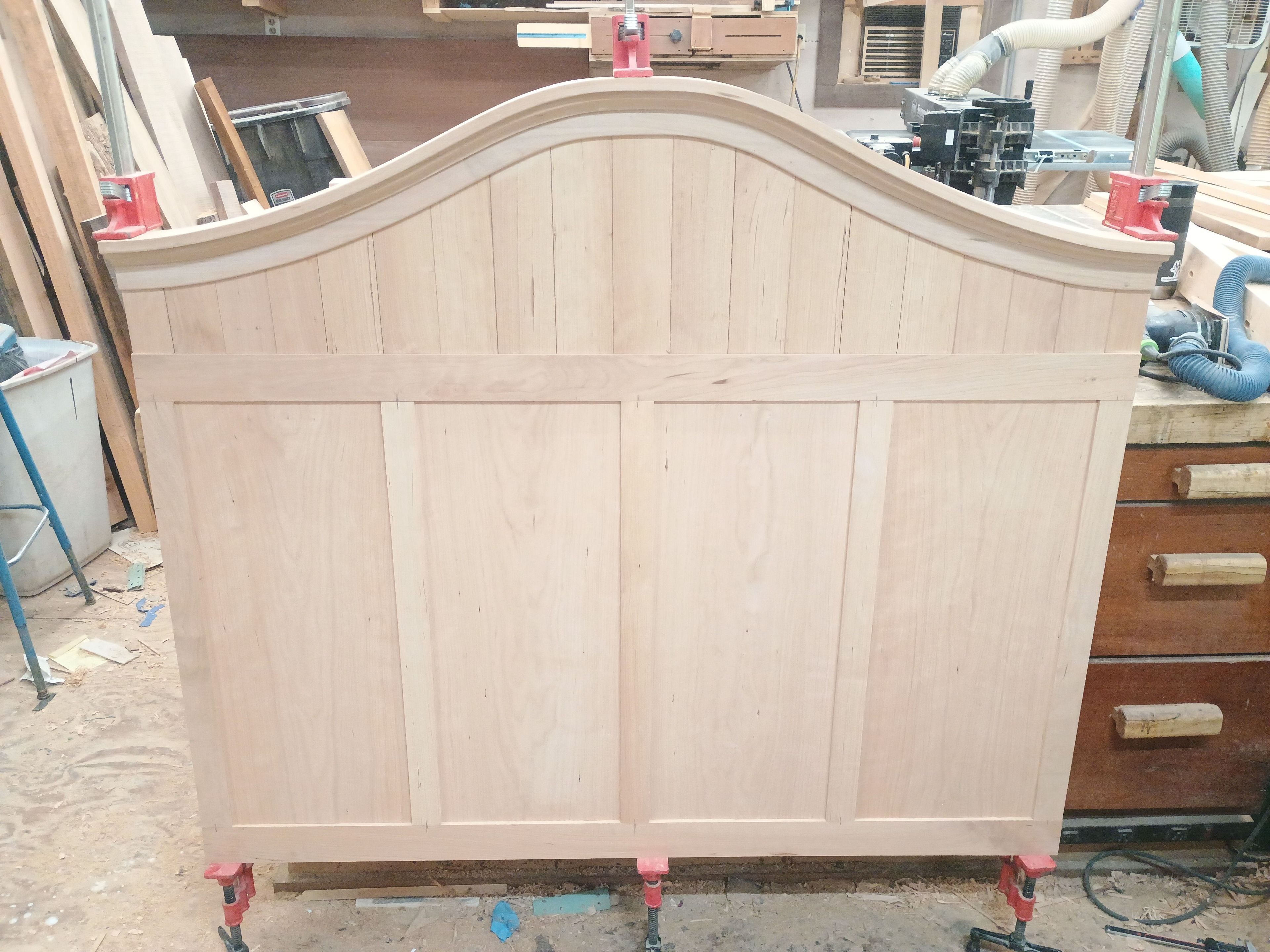
The four-panel back, dry fit, May 20.
The week the finish fell through
The piece was to be cherry, stain-matched to the Pottery Barn Kids dresser already standing in the nursery. McPherson ordered the color swatch on the day the proposal was accepted, and recommended having his local Sherwin-Williams custom-tint a match. He had used cherry under a walnut stain before, on a king-size bed, and it had worked nicely.
Eight days later the swatch was on backorder with no delivery date. He called the store. It was an older color they were retiring.
This is the moment where a commission quietly goes wrong. The maker is four hundred miles away, the customer cannot see the shop, and the easiest thing in the world is to choose the nearest available color and say nothing.
Here is what he sent instead:
I have a setback that I want your feedback on... How important is it to you that this crib is an exact match to your dresser? Did you say you have the color swatch?
Three moves in three lines. It names the problem as a setback rather than burying it inside a progress update. It asks how much the thing actually matters to them rather than assuming it is fatal. And it ends with a question they might be able to answer.
They could. They found a swatch in a Pittsburgh store, bought it, and posted it to Michigan. McPherson had Sherwin-Williams tint a match, then sent the match back for written approval before it touched the piece, with a suggestion that they keep a copy of the recipe in case they ever need it again.
The alternative version of that week is easy to picture. The closest available color, a finished crib, a freight crate, and a dresser standing three feet away in the nursery when the crate comes open.
A setback disclosed early becomes a problem two people are solving. A setback absorbed quietly becomes a defect that arrives by truck.

The custom stain match from Sherwin-Williams, sent for written approval on June 6.
The cadence
Five days passed between the cleared deposit and the first photograph from the shop. After that came the dry-fit back panel, the crib front, a general update, the toddler-bed gate, the stain match, and the finished piece.
Across four weeks, the conversation never went much more than eight days without either a photograph or a question.
Two of those messages were not updates at all. They were decisions handed back to the customer: which side would you like the gate attached on, and is this stain approved for use. He confirmed the mattress dimensions in writing before building to them. When he misquoted the height of the back panel by ten inches, he corrected it in the next message rather than letting it stand.
None of this is a system, and McPherson has never described it as one. It is simply what it looks like when a maker treats the relationship as part of the build.
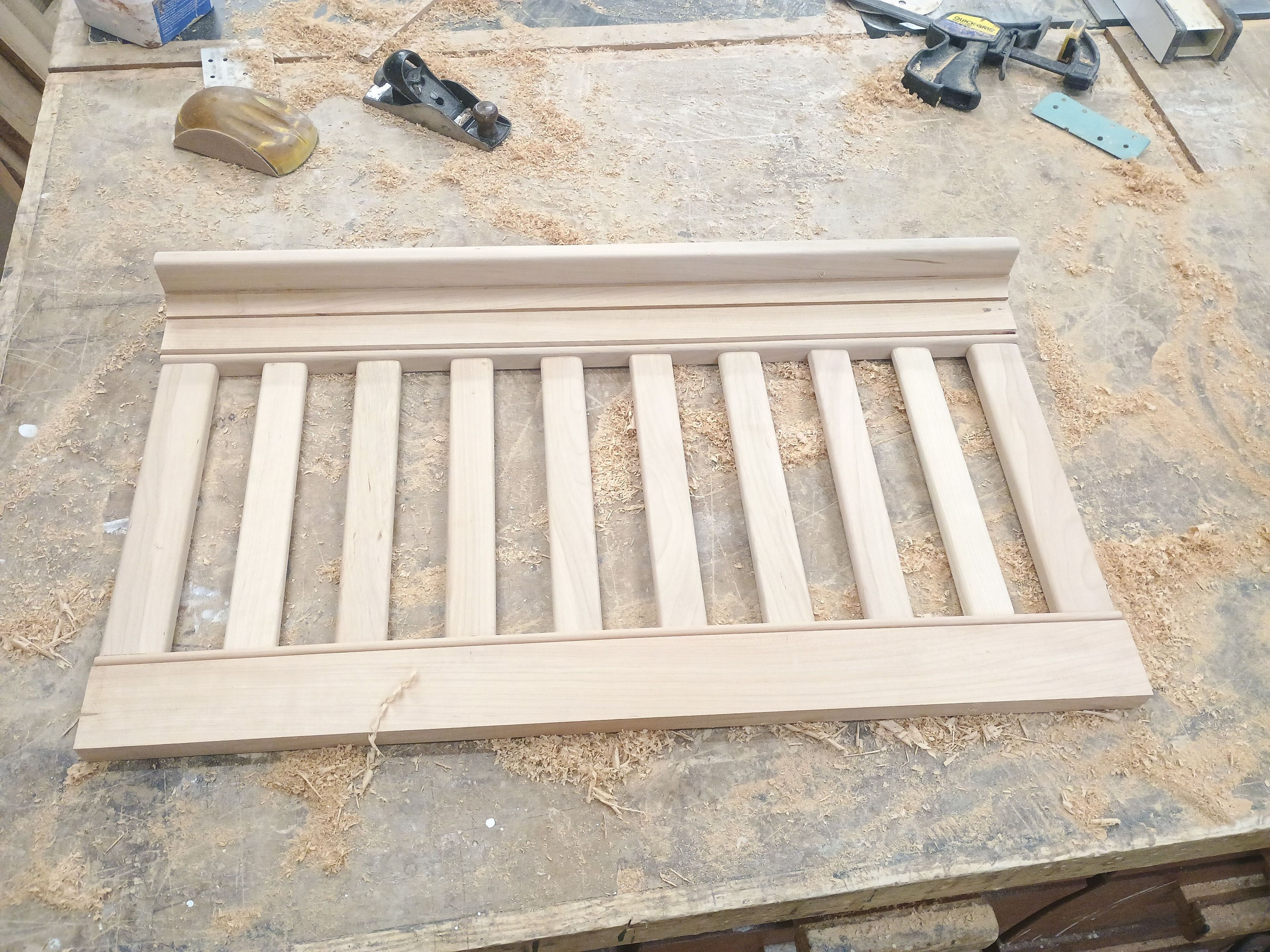
The toddler bed gate, offered left or right, June 5.
What the piece actually is
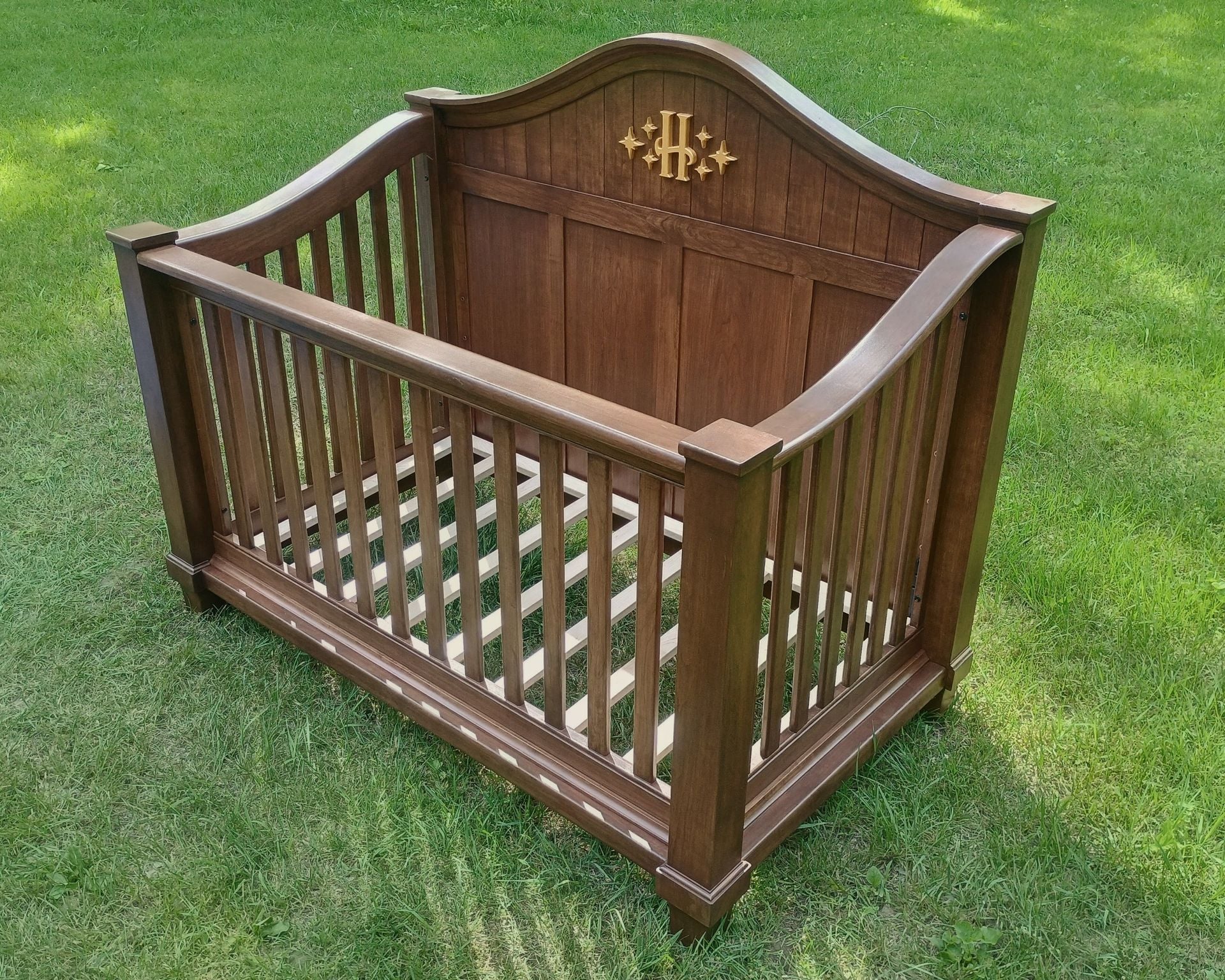
The finished crib stands within a footprint of sixty inches wide by thirty-six deep, the back posts at forty-two inches and the crown of the back panel close to fifty. Cherry throughout, under the custom walnut-toned stain. The top rail sweeps in a single arch across a solid four-panel back. Turned spindles run the sides and the front. A small inlaid monogram with four-pointed stars sits centered on the headboard, which is the only literal nod to the theme in the entire piece, and is all the better for it.
It converts four ways, from crib to toddler bed to daybed to full bed.
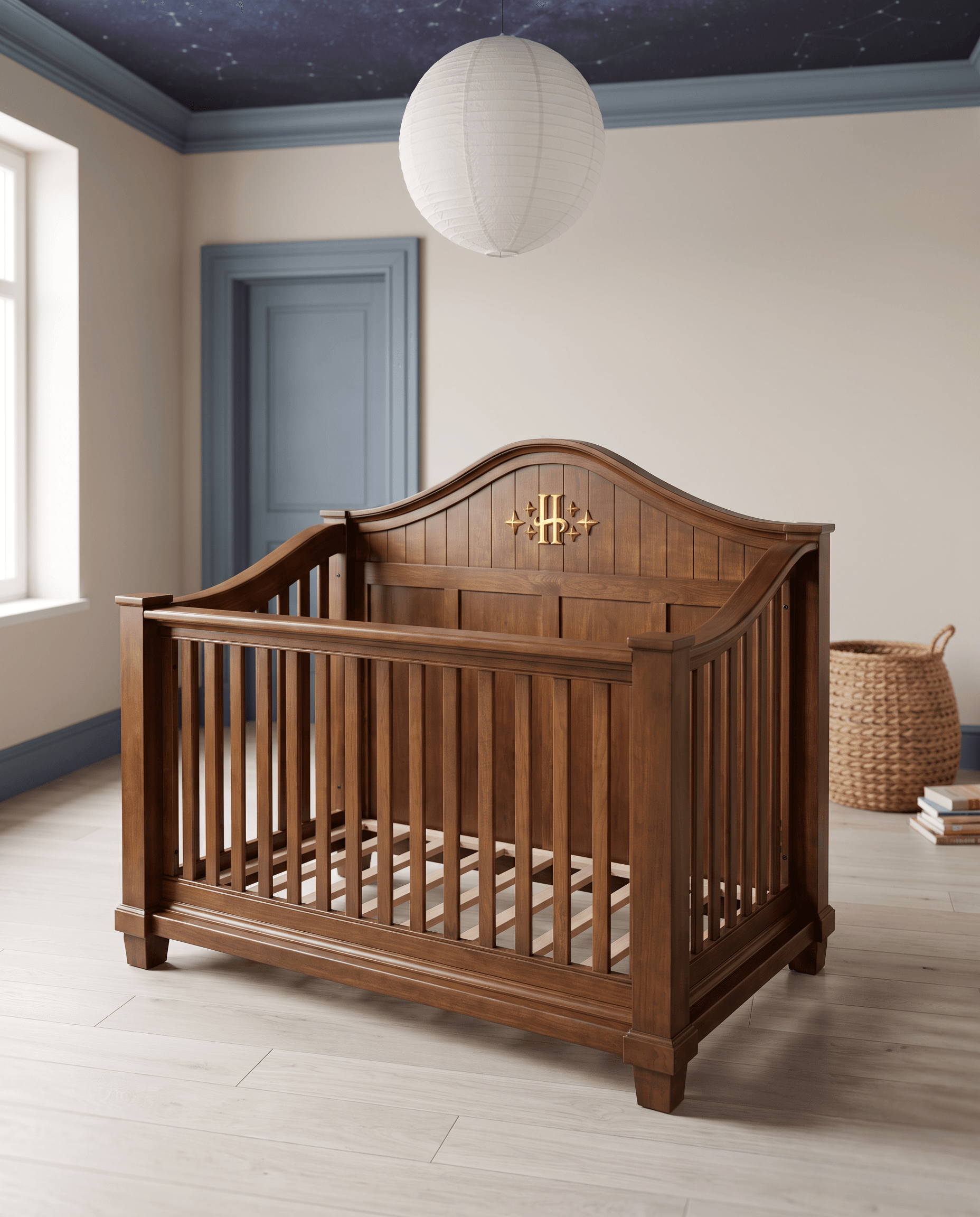
Visualisation. The crib is Doug McPherson’s delivered work, photographed in June 2026. The room around it is generated and is not the customers’ home.
The part most makers skip
Because the piece converts four ways, McPherson filmed a video explaining how to assemble it, and sent it before the crate shipped rather than after anyone asked.
The customers’ word for it was "very helpful."
Consider what that video is worth eighteen months from now, when the crib becomes a toddler bed and nobody can remember which rail went where, or in eight years when it becomes a full bed and the maker is a name in an old email. The commission is the object. The handover is what keeps the object usable for the next decade.
The crate went out on June 16 by freight, curbside with a lift gate, with the household manager’s number given to the carrier for advance notice. It arrived safely. On the day the piece was finished, McPherson had written:
This project was so fun for me. Thank you for trusting me with it.
A week after delivery he sent one more message, which is the one that says the most about how he works. He asked whether the experience had met their expectations, hoped the piece would become a cherished part of the family, and then asked for a favor.
If it were possible, he would love some pictures of it in the finished nursery.
Related Products




Discover true craftsmanship each week
A guide to the best items from the best makers and the stories behind them.